Sample Rations
While the goals of ranches and dairies across the country vary, whole cottonseed often fits into effective and nutritious feed programs for cattle. Dairy and beef producers who want to use cottonseed but aren’t sure where to start can use these sample rations* developed by regional experts as the basis for building a program. We recommend consulting a bovine nutritionist to adjust accordingly for your operation.
Dairy Nutritionist Sample Ration With Whole Cottonseed
The dairy operation utilizing this ration is based out of southwest central Wisconsin and milks 160 cows. The test day average shows that cows on this ration produce a 75-pound average with 4.5% butterfat and 3.3% protein.
| Item | 100 lbs. |
| Corn Gluten Feed | 33.2099% |
| Exceller Meal | 24.9074% |
| Soybean Meal 47% | 24.9074% |
| Whole Cottonseed | 5.7285% |
| Spectrum Fusion | 2.8642% |
| Salt White | 2.8642% |
| Sodium Bicarbonate | 2.3869% |
| Calcium Carbonate | 1.4321% |
| Dairy VTM | 0.7048% |
| Urea | 0.5659% |
| Magnesium Ox | 0.1909% |
| Calcium Phos. Mono-Dical | 0.1432% |
| Zinpro 40 | 0.0470% |
| Biotin 1% | 0.0247% |
| Rumensin 90 | 0.0184% |
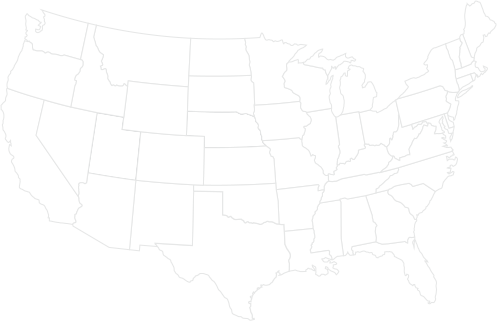
Southeast Region
These rations were formulated for dairy cows producing 95 lbs. of milk and 75 lbs. of milk, both with 3.75% fat and 3.1% true protein.
| Item | 95 lb | 75 lb |
|---|---|---|
| Corn Silage | 20.00 | 24.00 |
| Winter Annual Silage | 5.50 | 5.00 |
| Bermudagrass Hay | 1.00 | 2.00 |
| Whole Cottonseed | 7.00 | 7.00 |
| Ground Corn | 10.50 | 4.00 |
| Soybean Hulls | 2.00 | 0.00 |
| Molasses | 3.75 | 1.85 |
| Urea | 0.15 | 0.10 |
| Soybean Meal | 4.75 | 3.50 |
| Amino Plus | 3.00 | 3.00 |
| Vit + TM Premix | 1.29 | 1.29 |
| Total DM lb: | 58.94 | 51.74 |
Rations courtesy of John Bernard, University of GA, Tifton, Dairy Research and Extension
Northeast Region
This ration was formulated for cows producing 100 lbs. of milk.
| Item | 100 lb |
|---|---|
| Corn Silage | 22.00 |
| Alfalfa Haylage | 11.00 |
| Corn Grain | 8.00 |
| Corn Gluten Feed | 2.00 |
| Wheat Midds | 2.00 |
| Whole Cottonseed | 4.00 |
| Distillers Grains | 2.00 |
| Soybean Meal | 2.00 |
| Expeller SBM | 4.00 |
| Bypass Fat | 0.25 |
| Vit +TM Premix | 1.20 |
| Total DM lb: | 58.45 |
Ration courtesy of Larry Chase, Cornell University Dairy Extension
Midwest Region
This ration was formulated for cows producing 80 lbs. of milk with 3.90% fat and 3.20% protein.
| Item | 80 lb |
|---|---|
| Blood Meal | 0.5 |
| Calcium Carbonate | 0.4 |
| Distillers Grains | 3.0 |
| Ground Corn | 8.0 |
| Corn Silage | 21.0 |
| Whole Cottonseed | 5.0 |
| Alfalfa Hay | 7.0 |
| Magnesium Oxide | 0.1 |
| Vit+TM premix | 0.5 |
| Molasses | 3.0 |
| Salt | 0.1 |
| Sodium Bicarbonate | 0.4 |
| Expeller SB Meal | 2.0 |
| Soybean Meal | 1.0 |
| Total DM lb: | 52.0 |
Ration courtesy of Mike Hutjens, University of Illinois Dairy Extension
Eastern Region
These rations were developed for cows with actual production of 87 lbs. and 99 lbs. of milk with 3.8% and 3.4% fat, as well as 3.0% and 2.9% protein respectively.
| Item | 87 lb | 99 lb |
|---|---|---|
| Corn Silage | 19.0 | 14.3 |
| Alfalfa Haylage | 8.0 | 10.0 |
| Small Grain Silage | — | 5.8 |
| Whole Cottonseed | 3.8 | 3.4 |
| Hi-Moisture Corn | 8.9 | 12.8 |
| Soybean Meal-48 | 3.1 | 2.2 |
| Hi-Brix Molasses | 1.1 | — |
| Wet Brewers Grain | — | 2.6 |
| Prot+Vit+Min Suppl. | 11.8 | 5.6 |
| Total DM lb: | 55.7 | 56.7 |
Ration courtesy of Virginia Ishler, Penn State University Dairy Extension
Western Region
These rations were formulated for fresh cows and high cows with actual production of 85 lbs. and 90 lbs., respectively, with herd averages of 3.92% fat and 3.24% true protein.
| Item | 85 lb (Fresh) | 90 lb (Hi) |
|---|---|---|
| Soybean meal-47 | 4.10 | 2.70 |
| Rolled Corn | 8.80 | 17.60 |
| Whole Cottonseed | 7.20 | 6.30 |
| Alfalfa Hay | 11.90 | 12.30 |
| Earlage | 5.96 | 3.63 |
| Alfalfa Haylage | — | 3.65 |
| Corn Silage | 7.53 | 6.30 |
| Vit+TM premix | 1.13 | 1.13 |
| Liquid Supplement | 1.60 | 1.60 |
| Total DM lb: | 48.20 | 55.20 |
Ration courtesy of Carl Old, Ph.D. Nutritionist, Le Grand, California
*Ration formulas developed in 2019.